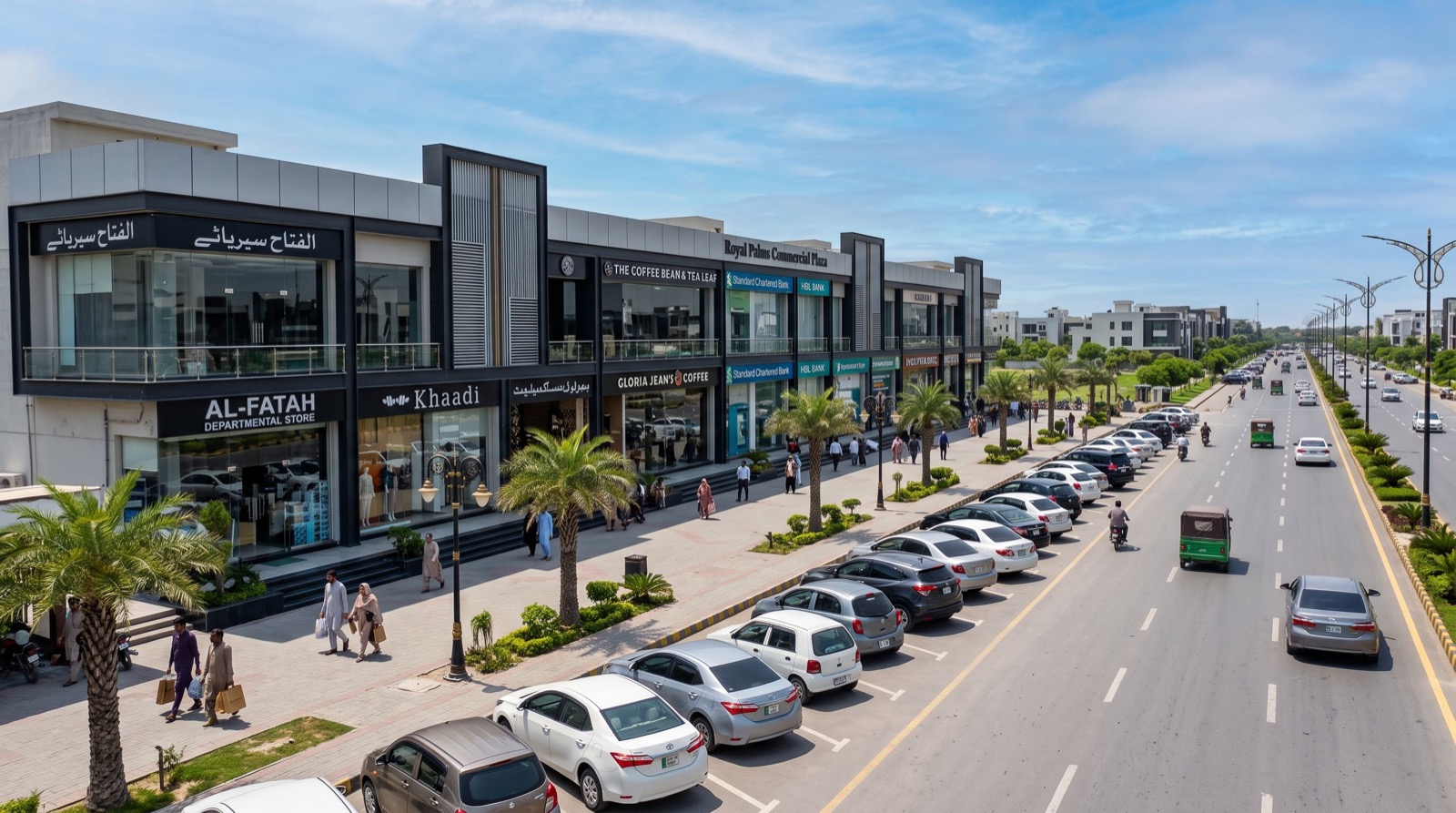
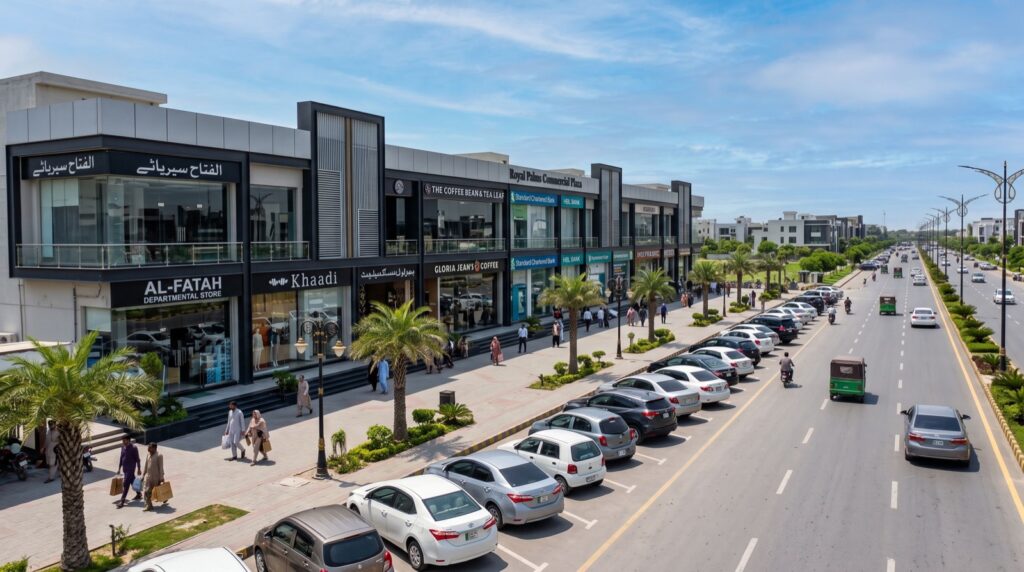
Real estate investment in Islamabad and Rawalpindi has quietly become one of the most reliable ways to build wealth in Pakistan, and in 2026 the smart money is moving toward vertical development. If you are weighing your options for capital appreciation, high-rise property near the twin cities deserves a serious look. This guide breaks down why high-rise plots and apartment developments are outperforming traditional single-storey plots, how to calculate a realistic return, and what to check before you commit a single rupee.
The twin-city corridor along the new Rawalpindi Ring Road is maturing fast. Land that sat idle five years ago now sits beside interchanges, commercial hubs, and gated communities. That shift is exactly what drives real estate investment returns: infrastructure first, appreciation second.
Why High-Rise Property Is Reshaping Real Estate Investment in 2026
Pakistan’s urban population keeps climbing, and land inside prime societies is finite. When horizontal expansion runs out of room, developers build up. That single trend has turned vertical living into the growth engine of the twin cities.
High-rise units let a developer generate far more sellable area from the same footprint. For an investor, that density means stronger rental demand, lower per-unit entry costs, and better liquidity when you exit. It is why buyers are increasingly targeting High Rise Plots in Rawalpindi inside planned, approved communities rather than scattered files in unplanned schemes.
Three forces are pushing high-rise appreciation right now:
- Ring Road connectivity — reduced commute times pull demand outward from saturated central sectors.
- Commercial anchoring — mixed-use towers with retail on the ground floor keep occupancy high year-round.
- Overseas remittances — non-resident Pakistanis prefer managed, low-maintenance vertical assets over open plots that need supervision.
How Do You Calculate ROI on a High-Rise Plot?
Return on investment is not just the resale price minus the purchase price. A disciplined investor accounts for holding costs, appreciation timeline, and rental yield if the unit is developed. Here is the framework I use when evaluating any twin-city asset.
- Entry cost — booking amount plus transfer fees, development charges, and any category-location premium.
- Holding period — most well-located high-rise plots reward a 3-to-5-year horizon, not a quick flip.
- Appreciation rate — historically strong societies near new infrastructure have delivered double-digit annual gains during launch-to-possession phases.
- Rental yield — once built, apartments in connected zones can yield roughly 4–7% gross annually.
- Exit cost — factor in the seller-side transfer and any capital gains tax due under FBR rules.
High-Rise vs Traditional Plots: A Practical Comparison
Both asset classes have a place in a balanced portfolio, but they behave differently. The table below compares the two on the metrics investors actually care about.
| Factor | High-Rise Plot / Unit | Traditional Residential Plot |
|---|---|---|
| Entry cost | Lower per unit | Higher lump sum |
| Rental income | Strong once built | Minimal until constructed |
| Liquidity | High in prime towers | Moderate, buyer-dependent |
| Maintenance | Shared, managed | Owner’s full responsibility |
| Appreciation driver | Density + commercial demand | Location + scarcity |
| Ideal holding period | 3–5 years | 5–7 years |
Financing Your Purchase Without Overstretching
The single biggest advantage of buying in a structured society is the installment model. Instead of paying the full value upfront, you spread it across a fixed schedule, which keeps your capital liquid for other opportunities. Reviewing the Silver City payment Plan is the fastest way to see how a phased schedule matches your cash flow before you sign anything.
My rule of thumb: never commit to a monthly installment that exceeds what you could comfortably cover if your income dipped for three months. Real estate rewards patience, and a defaulted booking can cost you the appreciation you were chasing.
When you evaluate a development, lean on an experienced local team who can verify the physical progress on site rather than trusting brochures alone. Boots on the ground remain the cheapest form of due diligence.
What to verify before booking
- Approval status of the layout plan with the relevant development authority.
- NOC and land-ownership documents in the developer’s name.
- Physical development milestones — roads, utilities, and structural progress.
- A written, dated payment schedule with clearly stated surcharges for late installments.
Managing Risk and Reading the Market
No investment is risk-free, and real estate is no exception. Regulatory changes, delayed possession, and speculative bubbles all exist. The way you protect yourself is through diligence, not optimism. Pakistan’s Federal Board of Revenue publishes property valuation tables and capital gains rules that every serious buyer should read before transacting, because tax treatment directly affects your net return.
Diversify across at least two societies or asset types when your budget allows. Track infrastructure announcements, interchange openings, and commercial launches — these are the leading indicators of the next appreciation wave. And always keep a documented paper trail: receipts, allotment letters, and transfer records are what turn a good deal into a defensible one.
Timing the Market Without Gambling
Investors often ask when the perfect moment to buy arrives. The honest answer is that timing the exact bottom is a fool’s errand, but timing the right phase of a society’s development is entirely achievable. The steepest appreciation almost always occurs between launch and possession, when raw land becomes a functioning community with roads, utilities, and occupied homes.
That means the best entry point is early — inside an approved, well-funded society showing visible progress — rather than waiting until everything is finished and priced accordingly. Buyers who enter at launch capture the full development premium; those who wait for certainty pay for it.
Watch the leading indicators rather than the headlines. A new interchange breaking ground, a commercial anchor confirming its tower, or a utility company energising a sector all signal that value is about to move. Patient investors who read these signals and hold through the cycle consistently outperform speculators chasing quick flips.
Signals worth tracking in 2026
- Ring Road interchange construction and opening dates.
- Confirmed commercial and mixed-use tower launches.
- Utility energisation and sewerage completion by sector.
- Rising possession-and-construction activity by real residents.
Frequently Asked Questions
Are high-rise plots a good investment in Rawalpindi in 2026?
Yes, high-rise property in well-connected, approved societies is performing strongly thanks to Ring Road connectivity, rising rental demand, and lower per-unit entry costs. The key is buying inside a legally approved community with visible development progress.
How much capital do I need to start real estate investment near the twin cities?
Thanks to installment plans, you can often begin with a modest booking amount rather than the full plot value. The exact figure depends on the society, category, and location premium, so always request the current payment schedule directly from the developer.
What return can I realistically expect?
Historically, well-located twin-city assets have delivered double-digit annual appreciation during launch-to-possession phases, plus 4–7% gross rental yield once developed. Treat any guaranteed-return promise with caution and model conservative numbers yourself.
Is a high-rise plot better than a traditional plot?
Neither is universally better. High-rise units offer lower entry cost, stronger rental income, and higher liquidity, while traditional plots offer scarcity-driven appreciation and full owner control. Many investors hold both to balance growth and stability.
Conclusion: Position Yourself for the Next Cycle
Real estate investment in the twin cities rewards those who buy early inside approved, well-connected communities and hold through the development curve. High-rise property, backed by a sensible installment plan and genuine on-site verification, offers one of the most attractive risk-adjusted returns available in 2026. Do your due diligence, read the tax rules, and choose a developer with a track record you can inspect in person. Explore the available high-rise options and payment schedules today, and take the first confident step toward a portfolio that appreciates with the twin cities themselves.